Egypt’s Revolution
After last year’s revolution in Egypt, the transition has
been anything but smooth, culminating in the military coup that occurred on
July 3rd. After the Arab
Spring, the country held an election to determine its new leader. However, the
election was only representative of the Muslim Brotherhood, and therefore
“democratically” elected Muhammad Morsi. In the aftermath, the military coup
remains in power, but the struggle for who will assume power after the
revolution remains a highly contentious matter.
Profile of a weak state: Egypt
Ranking 34th in the failed states index, Egypt
seems rather out of place among countries this high, as it has been considered
a fairly developed and established nation. Where the rank worst among the
criteria laid out by the FSI is in human rights and deligitimization of the
state. The first, human rights, is an essential indicator of how effective the
government is at serving and protecting its people and supplying them with a
environment conducive to development and growth. The second reflects how poorly
run the government has been and how poorly it is viewed by the public. Egypt’s
rating being so bad, an
8.9, this shows that the people have almost completely lost faith in the
government’s ability to operate effectively. It’s hard to argue with them, as
their elected president lasted only around a year. In these senses, it’s clear
why Egypt is considered a failing state.
According
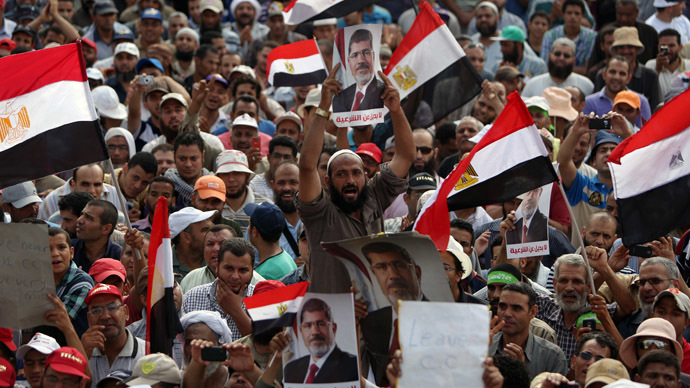
to the Economist The clash between Morsi supporters and more liberal
Egyptians is leading to rising tensions between the groups. Morsi supporters
are refusing to accept anything less than the reinstatement of the former
president. These same people are becoming fearful for their livelihood if any
other outcome occurs, and have been actively protesting ever since the coup. A
shooting on July 8th worsened relations between the two groups as
both sides blame the other for the tragedy. However, the security forces
throughout the city of Cairo have been glaringly one-sided against the Muslim
Brotherhood. In retaliation, members of the Brotherhood are now starting an
uprising of the current government, primarily around General Abdel Fattah
al-Sis, the man who started the military coup.

As for how Egypt restructures after the coup, a new
legislation and constitution must be drawn up, as well as setup institutions to
elect and appoint new leadership, more representative of the people. It seems
almost inevitable that the new leadership will be anti-Muslim and pro-liberal,
so it remains to be seen if this new government will withstand the feud between
the two groups. Obviously for Egypt to recover and establish a secure
government, it will be important to get the two sides to find some common
ground, however difficult that may be. Currently, the appointed interim
president and prime minister are completely ineffective in taming the anger
from the Muslim Brotherhood, as they continue to reject any proposals set
forth. Additionally, Egypt must fix its human rights problem, and fast. A
country as developed and established as Egypt should not have human rights
problems, and this will continue to drag down the well being of the state until
a solution is found. However, it can’t be ignored that this is all assuming the
transition of power from the military back to the government and people goes
smoothly. In history, military regimes have not always relinquished power so
easily. If there is too much delay in the transition, it could pose as very bad
news for the future of Egypt. While al-Sisi says he’s looking forward to
stepping down, in a country with so much turmoil, it can never be assumed
anything will happen for sure.
As Egypt moves forward from the immediate catastrophe
following the Arab Spring, it will be important to follow what steps are taken
to achieve a legitimate government, and how effective these actions are. Egypt
could lay a very loose guideline for achieving a stable state from a disastrous
situation.

Ive asked this of the others who have written about Egypt, but how would you describe the events of the past few weeks? Was it a civil war? A coup? Something else?
ReplyDelete