Sunday, July 28, 2013

Illegal Animal Trade

For decades now, the trade of illegal animals and animal parts has been happening across international borders, mainly in Africa and Asia. Animal trafficking is similar to drug and arms trafficking and can make someone, or a group, very wealthy. A huge part of the animal trafficking business is the trade of ivory. According to World Wild Life, in 2011, 23 metric tons of ivory was seized. Thats equivalent to 2500 elephants. The sad part is, that was only one seize in 2011. There a numerous more people and groups getting away with successfully trading ivory for large profits.


Other illegal animal trafficking involves tigers, cheetahs, monkeys, and turtles to name only a few. People see a value in these animals, whether it be their skin or shells, and want to put them on black market. Endangered species sell especially high just because having part of that endangered species is seen as a sign of wealth.

One of the main ways people transport these exotic animals across borders is by flying. Because London's Heathrow airport is a popular transfer airport in Europe, Marc Owen head of the UK Border Agency Operations at Heathrow, says each endangered animal that is transported through Heathrow should have a special marking, like a microchip. This microchip makes it easy to track the animal and helps prevent illegal selling and trading of the animal. Isaac (below), a cheetah from South Africa was being transported to Russia but was seized in Heathrow because he had a missing microchip. Isaac is being kept at a UK wildlife park while his investigation continues.  


The cruel treatment and death of these beautiful animals for either their tusks or skins or just money is hard to accept. Nothing should ever be treated like some organizations treat these helpless animals. "The planet's most majestic species are being massacred for nothing nobler than vacation trinkets, hangover remedies and false promises of miracle cancer cures," said Carter Roberts, President and CEO of WWF-US. 


On a brighter note, there are measures being taken to try and get rid of animal trafficking. Recently Thailand's Prime Minister announced Thailand would end their sales of ivory. With Thailand being a country with a huge exotic animal population, this is a huge step towards getting rid of animal crime. President Obama was recently in Africa and has vowed to help stop animal trafficking, presenting $10 million for the necessary training to combat African wildlife trafficking. "Poaching and trafficking is threatening Africa's wildlife" said Obama during his visit to Tanzania. With the involvement of Obama and the United States, this is yet another huge step to stopping or reducing illegal animal trafficking. The best way to help end animal crime across international borders is to spread the world and keep people educated on the subject. With more people involved around the world, supporting the end of animal trafficking, there is hope that these beautiful animals will never have to be killed just for someone to make a profit. 

Mexico and the human security problem they face with the drug cartels

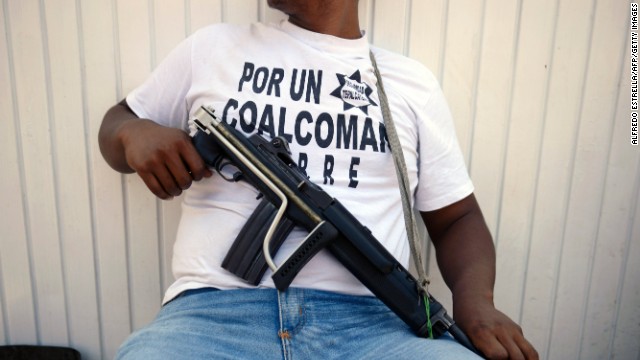
According to cnn there was a clash in Mexico that left 22 people dead and fifteen injured. This has been happening since the crack down that lead Mexico and the United States to focus there forces on the drug trade and clean it up.


 This is a very high amount that perished in Mexico and we have seen stuff like this in the headlines since 2006,
According to the Business Insider Felipe Caldron who was the president at the time of the crack down sent 50,000 soldiers to battle the cartels in 2006. This tactic to curb the drug trade and the corrupt officials have lead to more than 55,000 deaths. That is an astonishing number considering that in Syria which is officially in a  civil war  has caused about 100,000 deaths according to the UN. There have been a number of public execution along with disappearances that have left the public in astonishment by how these acts have been committed. According to the Business Insider 49 corpses were decapitated in public and dumb in the high way in northern Mexico.

In addition to the public display of corpses the drug cartels have been involved with over five thousand disappearances since the war start on drugs in 2006. 
With these numbers I don't see an end to this war on drugs. This is where human security comes in and whether or not Mexico and protect its citizens from the crimes of the criminals. Does Mexico have an end plan? Can things getter better? Maybe Mexico and there citizens were better off before this step up on drugs and corruption. Less deaths were involved. This war has made Mexico look like a weaker state then it already was, but not all blame goes on them. What about the United States and there demand for the drugs. Can that be stopped? Only time will tell, but until then Mexico faces an uphill batter with human security.

Organized Crime in Thailand's Tourism Industry

According to ETN Global Travel Industry News, Thai Tourism and Sports Minister Somsak Pureesrisak has taken a stance against rampant organized crime present in the state’s tourism industry, and particularly across the island of Phuket. On Friday it was reported that Minister Somsak called for an end to the “age-old” Phuket practice of holding foreigners’ passports as a condition for renting motorbikes, cars, and jet-skis.

Yakuza and International Strategies

The Yakuza and International Strategies to stop them

After doing the readings and watching the various documentaries on international crime and organized crime around the world I became very interested in the dealings of the Yakuza, the Japanese crime syndicates.  I spent last summer in Tokyo and I the view of the yakuza I have, through the lens of my Japanese friends is a highly romanticized ideal of the Yakuza.  They seem to represent a unique “screw you” attitude that is refreshing in a nation that is based so strongly on following a predefined societal path.  But after doing a little research it become clear that while the yakuza may seem cool they are highly dangerous and are posing problems not just at home but abroad as well.


The US has begun an active campaign to, in the words of the Obama administration,   "target transnational criminal organisations and isolate them from the global financial system”.  Several key members of the Yakuza have had their American assets frozen and the goal is to freeze them out of the international market place, where they have been key players in everything from drug smuggling to human trafficking.  The Yakuza have around 80,000 registered members, easily the largest organized syndicates in the world and it wasn’t until recently that they have been cracked down on at home.  The laws in Japan have always been vague and soft when it came to the Yakuza, they were allowed to operate with very little interference.  Traditional Yakuza crime included prostitution and exstortion, but as times change and the money moves they have spread their influence into many other sectors.  They are now participating in predatory loans, as well as construction, while still employing their traditional intimidation and extortion.  They have been tied to drug trafficking into Japan as well as prostitution rings internationally.  At least in the US, prostitution is illegal, but it is difficult to prosecute across international boundaries.  That leaves the US government with very few options.  It still remains to be seen if financial exclusion will be enough to reign in Yakuza activity internationally.  The Yakuza will always have a romanticized image and as long as they have the hearts of the people, they will be very difficult to stop. 

Saturday, July 27, 2013

The Crackdown of Colombian Cartels


Ever since President Álvaro Uribe took office in 2002, the drug cartels in Colombia have been on their heels. After 30 years of terror and control, the cartels are a shell of their former organization, and have continued to fragment into smaller organizations. The DEA and the Colombian National police have continued to keep the pressure on the cartels, and while they are still in operation, they do not have near the strength they did even 10 years ago. 


Friday, July 26, 2013

Cyber Security: A Call to Arms

It doesn't take much to find stories about cyber attacks; phishing, identity theft, stolen credit card numbers are all symptoms of a critical issue in today's world: cyber security. With the advent of the internet, it has become easier and easier to steal personal info, or to unknowingly give it to someone who will use it to wreak havoc on your life.

Photo courtesy of inserbia.info


I'm proposing a call to arms, so to speak. Now, this has nothing to do with guns and bombs and military; this is a plea for people to arm themselves with an understanding that the person on the other side of the internet is not someone you know anything about. I'll use an example.

Omegle.com is a site similar to chatroulette, in which people can chat with each other in complete anonymity. It's mostly filled with horny teenagers, but with a little ingenuity, we used it to look at the dangers of cyber security. 

My brother is an amateur computer programmer. He wrote a script embedded in a url, which when clicked will send the IP address of whoever clicked it to a server. We could then trace that IP address, and find out where the other person lives, within about ten miles. Now, you might be thinking, "why would anyone click an unknown link?" People fell for it by the dozens. It didn't matter where; north carolina, chicago, paris, you name it, and we could find it. And all it took was a bit of programming.

All this to say; be wary on the internet. Anyone can steal your personal info, without much effort. That's my spiel for today; thanks for reading.


Trafficking of Human Body Parts: Serbia

I found this really insanely scary article in the New York Times (http://www.nytimes.com) from only a year ago about illegal body part trafficking. It details the Europeans facing "grinding poverty" who are seeking to sell their kidneys, lungs, bone marrow, and cornea among many other parts for cash.

(www1.american.edu)


The Internet provides a platform for this black-market. The asking price for a lung, for example, will pull you in around $250,000. Unfortunately, there is a lot of fraud within this system, as you can probably already imagine. There are two sides of this coin: the wealthy but sick, and the desperately poor. People will either falsify information, or not come through on their end of the deal.